
Ryan Roberts is a Marine Corps veteran, a home inspector who has run his own company since 2009, and a dad of four. In 2020, a motorcycle crash resulted in a left below the knee amputation. Since then he has walked on his own, ridden thousands of miles on his motorcycle, tied for first in an adaptive golf tournament, and run for the first time since his amputation at Alliance's first-ever running clinic in August 2026. This fall, he picked up his first running prosthesis!
Running Prosthesis Day
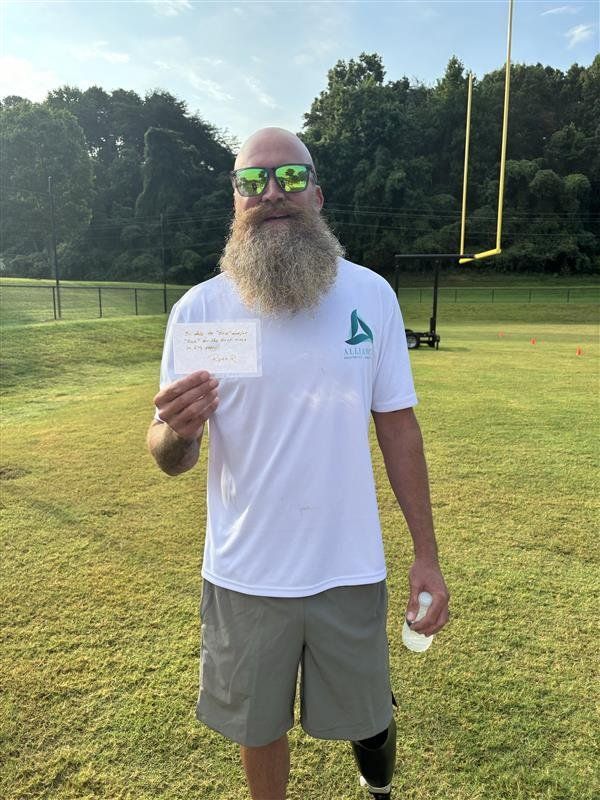
On November 12, 2026, Ryan sat down with us to share his story. As soon as the interview wrapped, he picked up his very first running prosthesis! Ryan hadn't thought much about running since his amputation. Then he tried it at Alliance's first running clinic in August, and he set a new goal: a running prosthesis of his own.
Ryan ran a lot in the Marine Corps and for years after, but once he lost his leg, running was the last thing on his mind. When Jason invited him to our first ever running clinic, August 28 and 29, 2026, he said yes right away.
"Yes, absolutely. I want to see like what this is all about to see if I can even do it," Ryan said.
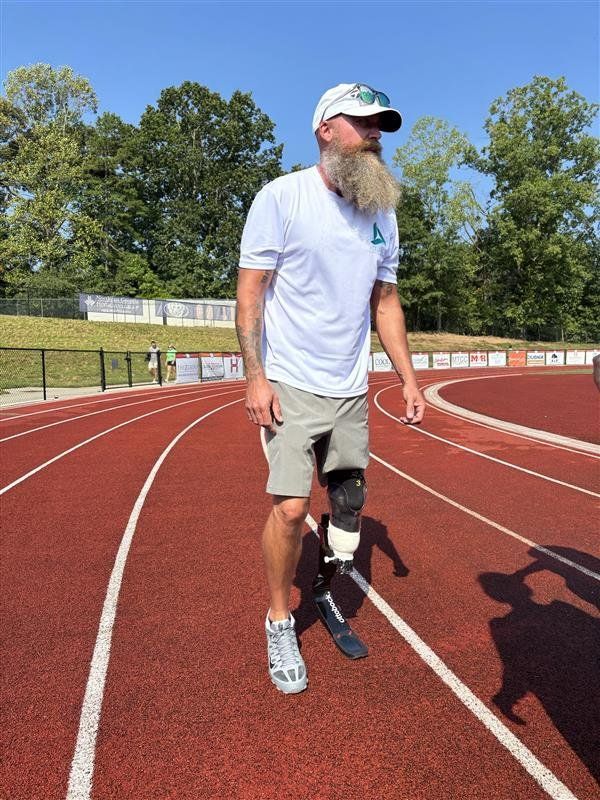
Our team fitted him with a running blade and got it dialed in. Francois J. Van Der Watt, CPO, team prosthetist for the 2012 London, 2016 Rio, 2020 Tokyo, and 2024 Paris Paralympic Games, worked with him and gave him tips on what to work on, like building strength in his thigh so he could run better. That day, Ryan ran for the first time since his amputation.
Ryan's goal for that clinic, in his own words: "Be able to 'jog' and/or 'run' for the first time in 6 1/2 years." After working with our team and Francois most of the day, he was jogging. Ryan was able to meet his goal that day!
"So after the running clinic, I was like, 'Yeah, I need to have one of these,'" Ryan said.
His goal for his new running prosthesis is to run in his front yard, then take it to the gym to run on the treadmill.
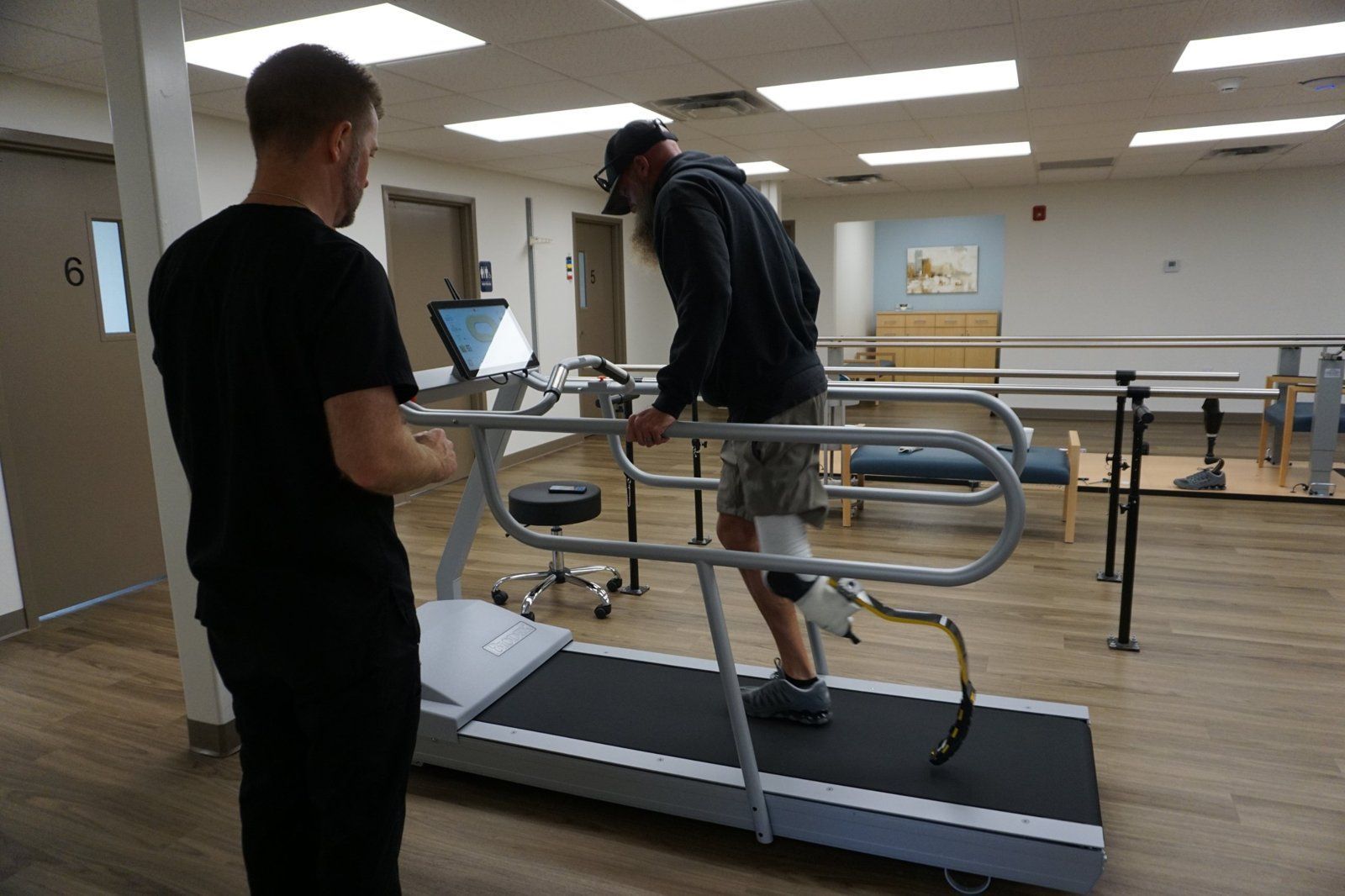
"It's nice to be able to do something like that, like jog or run," Ryan said.
Six or Seven Miles From Home
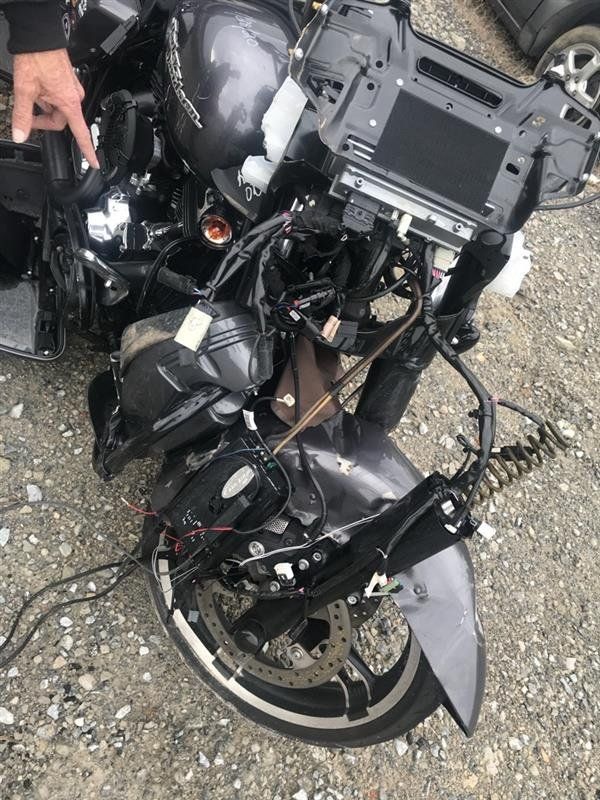
On January 28, 2020, just after dark, Ryan and his wife, Jenny, were six or seven miles from home on his motorcycle. They were going 40 to 45 miles an hour when an SUV waiting to turn pulled out in front of them and hit the left side of the motorcycle.
Every bone in Ryan's left leg was broken. His femoral artery was torn. He had a collapsed lung, a ruptured spleen, and broken ribs. A fire truck happened to be sitting at the stop sign right at the scene of the accident and witnessed the entire thing. The firefighters rushed over and put a tourniquet on Ryan's leg within seconds. Ryan never lost consciousness.
"The firefighters being there was a true blessing," Ryan said.
Jenny was injured in the accident too, with deep cuts down her left leg. She was released from the hospital the next day, moved into Ryan's hospital room, and never left his side.
"Pick Up Where I Left Off"
Ryan spent about a month in the hospital and had 15 surgeries. His doctors pieced his leg back together with titanium rods, but an infection set in where his lower leg had broken. They tried cleaning surgeries, skin grafts, and every antibiotic they could give him, but the fevers kept coming and his white blood cell count kept climbing.
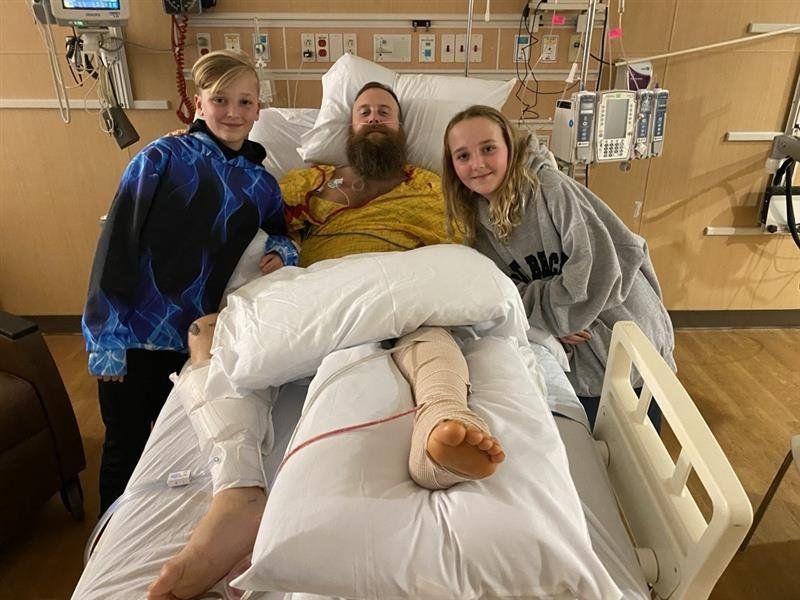
One day a friend of a friend walked into his room. He had lost his left leg below the knee in a motorcycle crash years earlier, after nearly a decade of surgeries trying to save it. He took off his prosthesis and handed it to Ryan.
"I think it immediately gave me hope," Ryan said.
Ryan started asking about amputation before his doctors were ready to. They wanted to try and save his leg, but Ryan knew what he wanted.
"My goal was to heal up and get out of the hospital and pick up where I left off."
His surgeon brought in other doctors to talk with him, and they all asked him to give them more time to try to save the leg. Ryan was fine with that, but he wanted them to know he was ready. After another surgery, his team came back and told him amputation was the best option left. Ryan's answer: "Let's do it." They did the amputation the next morning, and he went home about a week later. Once the amputation was done, Ryan says, the difference was night and day.
"I started feeling better. It was dramatic, the change once they did the amputation," Ryan said.
Blizzards for the Whole Floor
Rachael Auyer, Alliance P+O Co-Owner, was praying for Ryan before she ever met him. His name came up on a prayer list shared by friends from church, the same couple who own the real estate team Jenny works for. Around the same time, Jason Auyer, Alliance Clinical Director and Owner, got a call to see a new patient named Ryan Roberts. Rachael realized she had been praying for him all the way into the hospital room where Jason would meet him.
"It was just meant to be," Ryan said.
Once he met Jason and Rachael, choosing Alliance was a no-brainer, he said.
After the amputation, Jason came to fit Ryan in the hospital with a post-op protector, a device that keeps the leg straight so the knee doesn't stiffen in a bent position and protects the limb from any bumps or falls.
That night, Ryan's pain kept climbing. He texted Jason, who called right back from a dinner date with Rachael and told him to take the post-op protector off in case it was too tight. Ryan felt ten times better once he took the protector off.
Then Jason and Rachael finished dinner, stopped at Dairy Queen, and showed up at the hospital with 15 Blizzards. They handed them out to the nurses on the floor and told them they were from Ryan.
"Just those little things that, like, concrete the fact that they care," Ryan stated.
By then COVID was in full swing. Alliance had to cut back our hours, but Rachael says Ryan was one of the people they thought about when deciding to stay open. Because Ryan's health care runs through the VA, he called VA Community Care and asked to use Alliance, a civilian prosthetist close to home instead of a VA hospital an hour away. With COVID keeping people out of hospitals, the VA approved it. At a follow-up appointment with his surgeon, Ryan had his staples removed, and the doctor told Jason he was ready for a prosthesis. Jason scanned his limb with a scanner at our Gainesville clinic that week. Early the next week, Ryan stood between the parallel bars on his first prosthesis and took his first steps!
"Nothing in Your Hands. Just Take a Step."
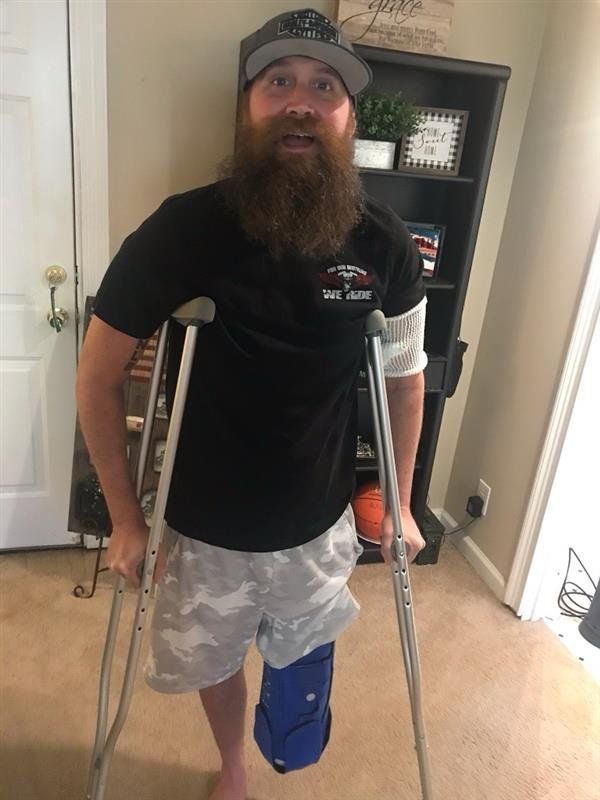
The hardest part wasn't getting the prosthesis. It was learning to trust it, Ryan said.
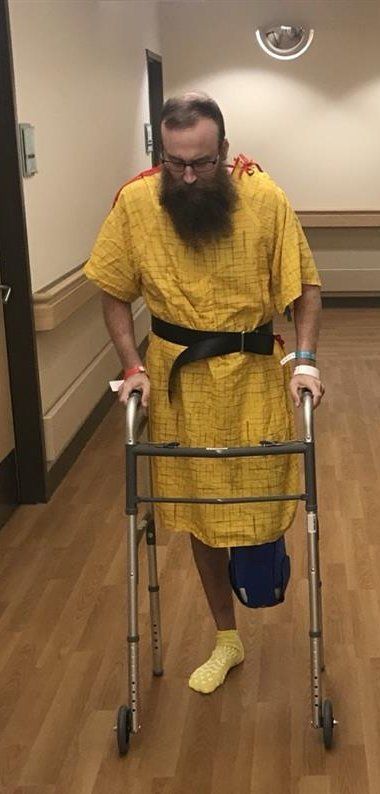
At first he wore his prosthesis for an hour a day, then two, building up to six or eight hours. Ryan went from a walker to two crutches, to one crutch, to a cane. His physical therapist kept urging him to put the cane down and take a step, trusting his prosthesis. For a while he would stand with all his weight on his other leg, the prosthesis barely touching the floor.
He had reason to be nervous. The day after he came home from the hospital, he lost his balance on his walker and fell back into a bookshelf. His first words to Jenny: "I didn't hit my leg."
Jason had a plan for the fear. He jokingly told Jenny to walk Ryan out into the grass and push him down, so he could learn falling wasn't so bad. For the record, Jenny never did it.
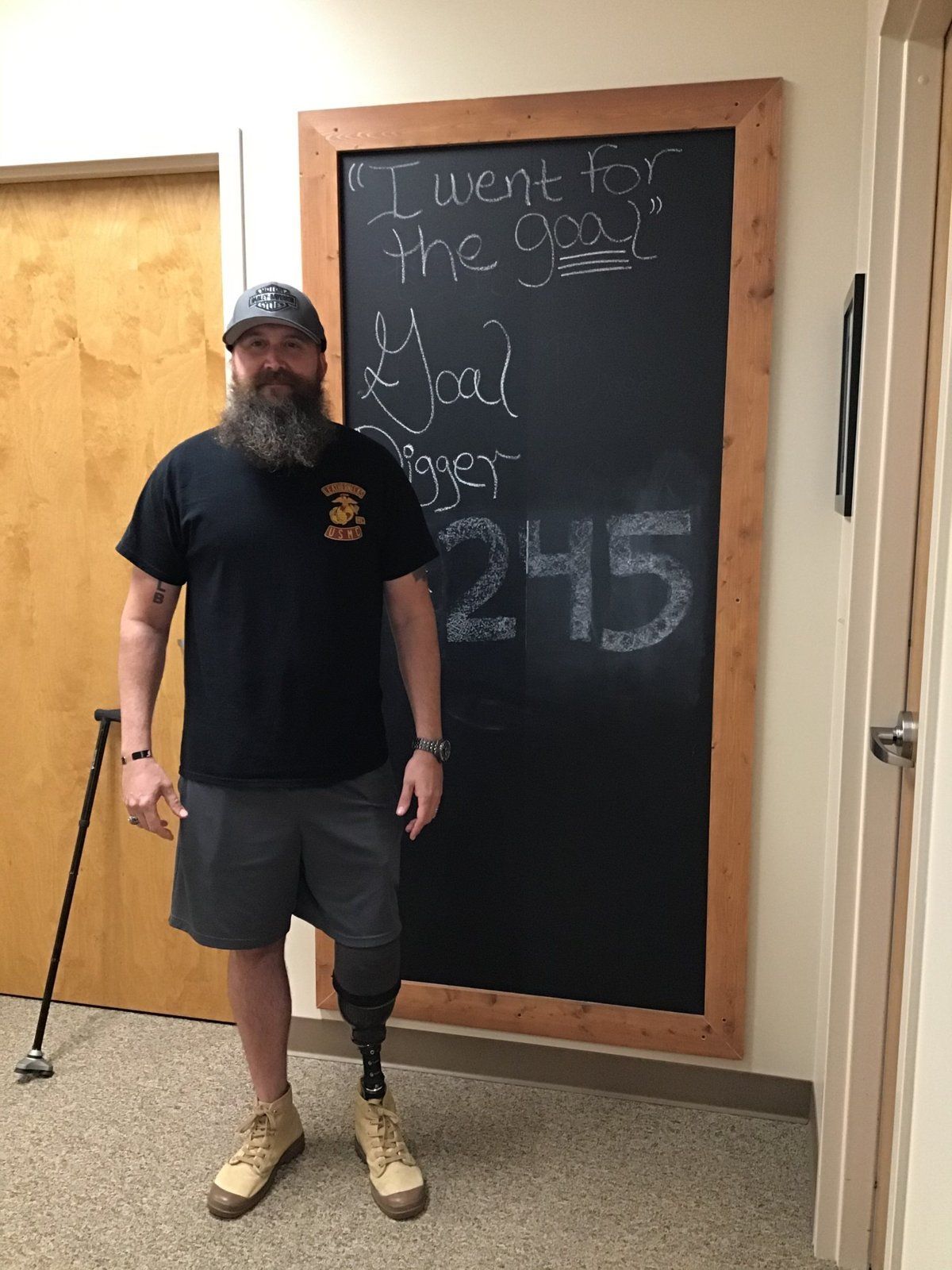
Ryan took his first steps with nothing in his hands in their carpeted basement, right next to the bed in case he fell. Then he propped his phone on the bookshelf and filmed himself walking.
Once he could walk without help, his next goal was to walk as naturally as possible. The surgeries on his thigh had removed some muscle, leaving that leg with about half to three-quarters of the strength of his other one. Physical therapy, walking in front of a mirror, and recording himself helped him smooth out his limp.
In the six years he has had his prosthesis, he figures he has only fallen three or four times.
"Just know you're gonna fall. You can do everything you can to avoid it, but it's gonna happen. It's good to know how to fall."
Back on Two Wheels
Ryan had been riding motorcycles full time since 2004. In 2014, he joined the Leathernecks, a nationwide motorcycle club open only to Marines and Navy corpsmen. That meant more miles, long out-of-town trips, and a group of brothers who loved the road as much as he did. Riding wasn't just a hobby for Ryan. It was a big part of his life, and something he and Jenny shared.
The crash totaled his motorcycle, but it never changed his mind about riding. Even from his hospital bed, Ryan was telling everyone that as soon as he got out, he was going to find another one. He also knew it could be done. An Army veteran friend of his, who had lost his left leg above the knee, was still riding.
"He rides a motorcycle, so I had a lot of motivation," Ryan said.
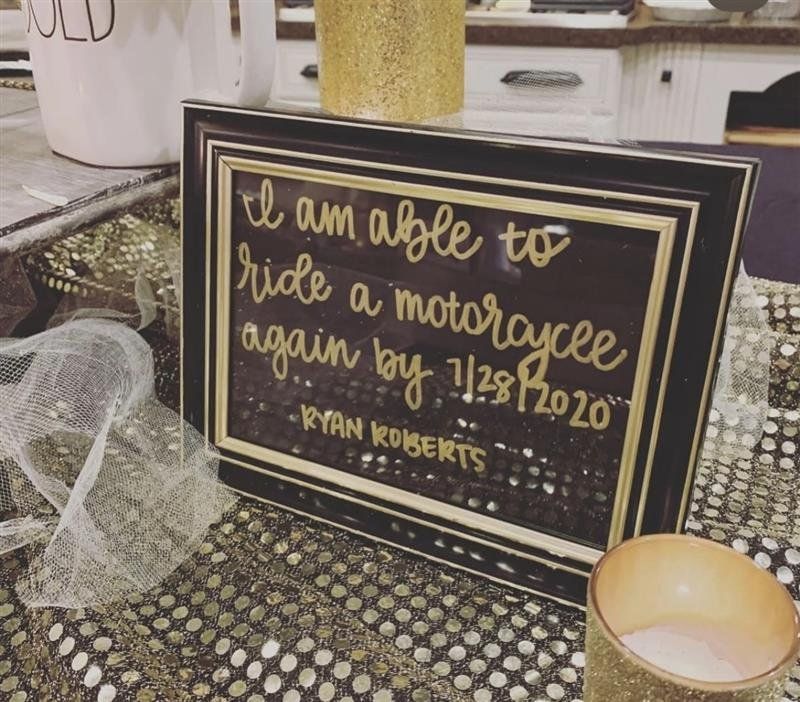
So one of his first Alliance goal cards read: "I am able to ride a motorcycle again by 7/28/2020." That date was six months to the day after the crash. For Ryan, getting back on a bike was non-negotiable.
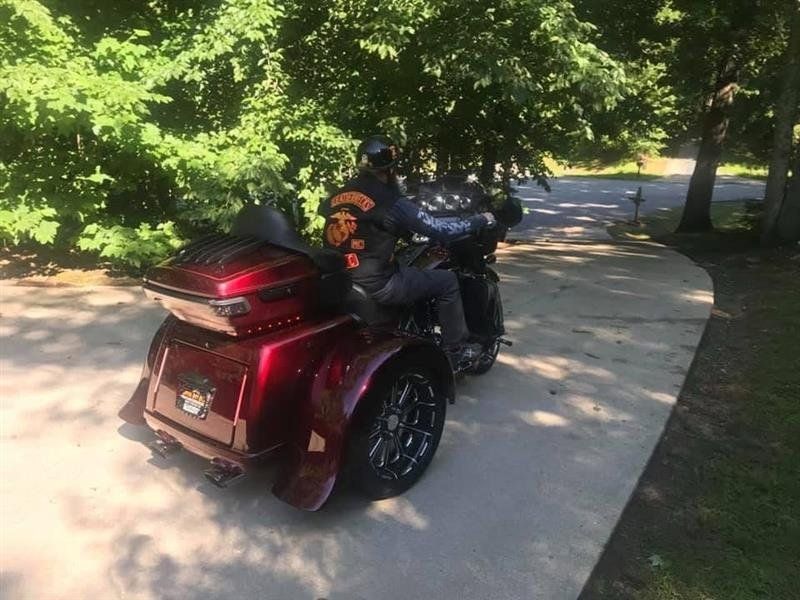
His first ride back had three wheels. A friend of his dad's had a Harley-Davidson trike he wanted to sell, and he offered it to Ryan for the same price a dealer would give him on a trade-in. Ryan and a buddy rented a trailer and picked it up in South Carolina. Ryan was riding again before his goal date, and he put 12,000 to 14,000 miles on that trike in about a year, including a ride to Austin, Texas, and back.
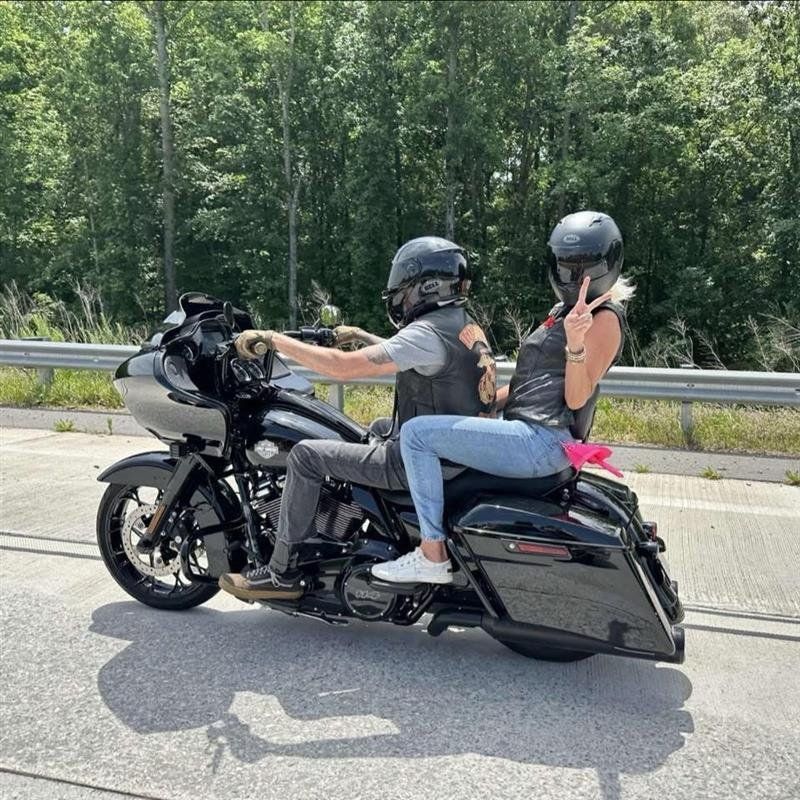
But a trike wasn't the same, and Ryan wanted two wheels again. With Jenny's support, he bought a used Harley-Davidson Fat Boy to learn on. He chose it for its floorboards, which give his prosthetic foot a flat place to rest instead of a narrow foot peg. He also added a heel-toe shifter, so he can shift gears by pushing down with his heel or his toe.
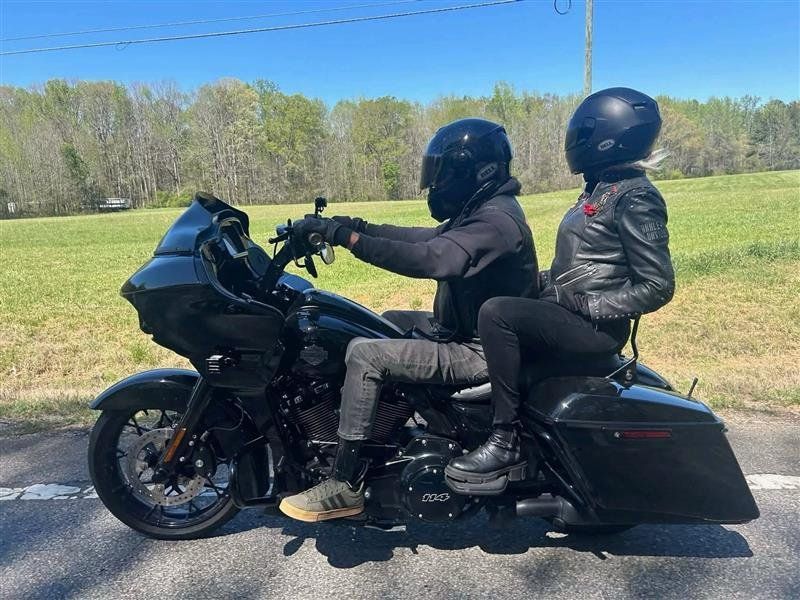
His first ride was to the gas station and back, and it was easier than he expected. After a few day trips with his buddies, he traded up to a 2021 Harley-Davidson Road Glide Special, a lot like the motorcycle he lost in the crash.
Work came back the same way. Ryan hadn't planned on going back to home inspections right away. Then a past client called needing one. Ryan wondered whether a job that used to take two or three hours would now take eight, but he took it as a test run. When he finished, he told Jenny, "I can do this." He eased back in one inspection at a time, around his doctor and prosthetic appointments.
Inspections mean walking yards and hillsides and climbing stairs and attic ladders, so Ryan did some research and brought ideas to Jason. Together they chose a foot with ankle movement in every direction, and the VA covered it.
Then came a water leg, also covered by the VA. Days on the boat at the lake and trips to the beach were a big part of life with family and friends, and Ryan didn't want to be the one sitting in a chair while everyone else swam. On the next beach trip, he headed straight out past the waves.
That year, we named Ryan our Goal Digger of the Year for 2020.
Ryan and Jenny were able to be celebrated at Jason and Nikki Bonds' home for an intimate Goal Digger event because of COVID. The community surrounded them and helped support both Ryan and Jenny through recovery.
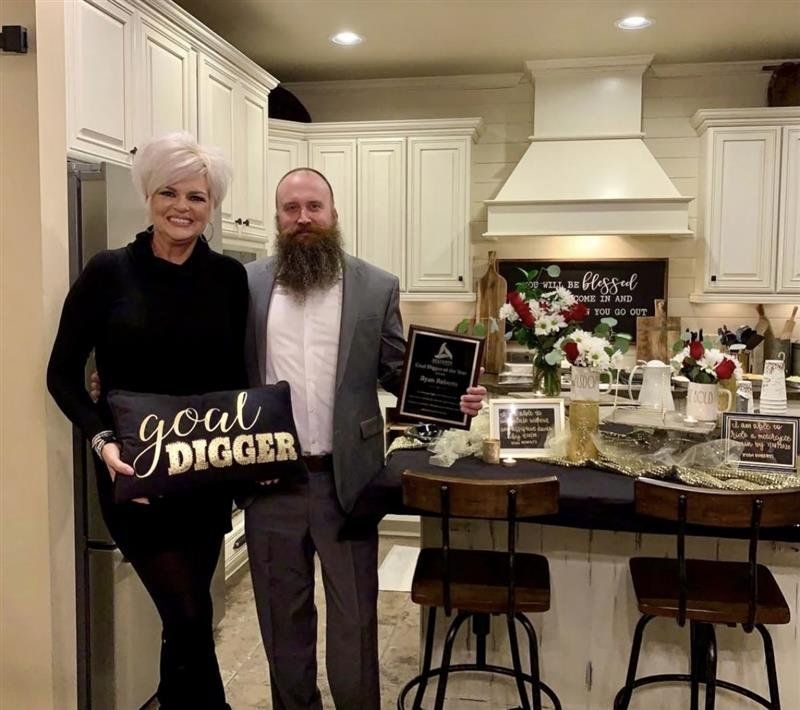
"He's always willing to like listen to exactly what you have going on, and then find a way to fix it," Ryan said of Jason.
Tied for First
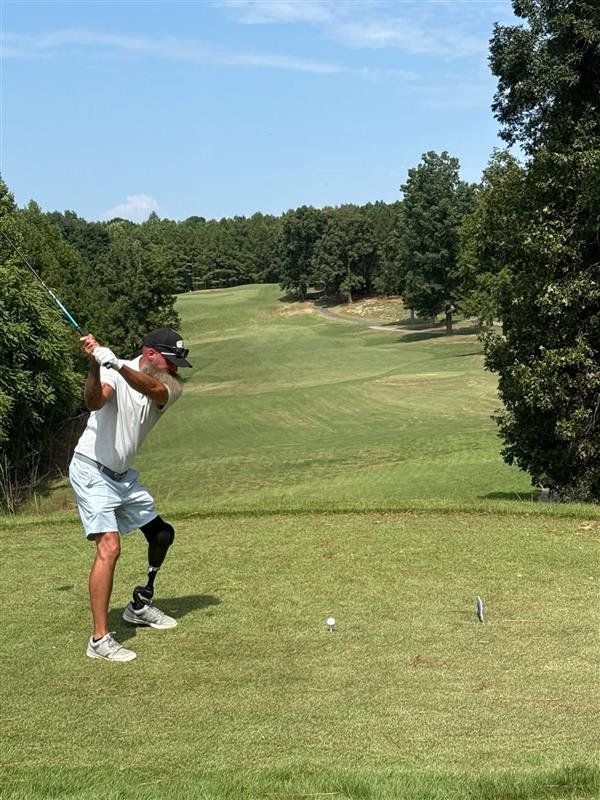
Golf wasn't on Ryan's list until a buddy invited him to a charity scramble. He borrowed his son's clubs, hadn't swung since his amputation, and hit some decent shots.
"I was like, 'Hmm, I think I might be able to do this,'" Ryan said.
His son had started playing too, which gave him even more motivation.
He went from a cheap set to fitted clubs and lessons, played with his son, and went through the PGA HOPE program for veterans twice. When it came time for a new foot, Jason ordered a few for Ryan to try. Golf courses are full of hills, steep grades, and sand, so Ryan took his trial foot out for a round to see how it handled them. It worked great!
In January 2026, he joined the Georgia State Golf Association (GSGA) Adaptive Golf Program, starting with its clinic at Chicopee, and found a whole community of adaptive golfers.
He played his first adaptive tournament in early September. At his second, a GSGA Adaptive Golf Program tournament, he tied for first and took second after a scorecard playoff, decided by one shot on the last three holes. Next up: the 2026 Palmetto State Adaptive Golf Open in South Carolina.
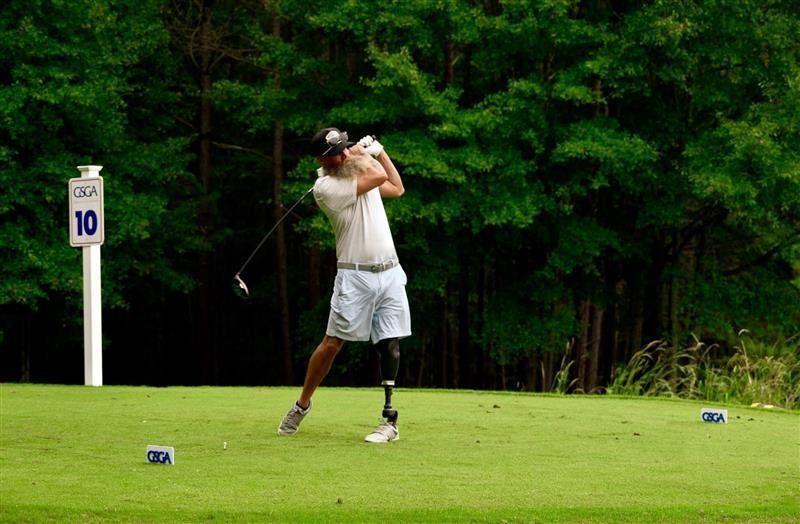
On the course in shorts, everyone can see Ryan's prosthesis. On the motorcycle, other riders spot it and give him a thumbs up. Ryan says that pushes him to play well and keep going, for himself and for anyone watching who might be holding back.
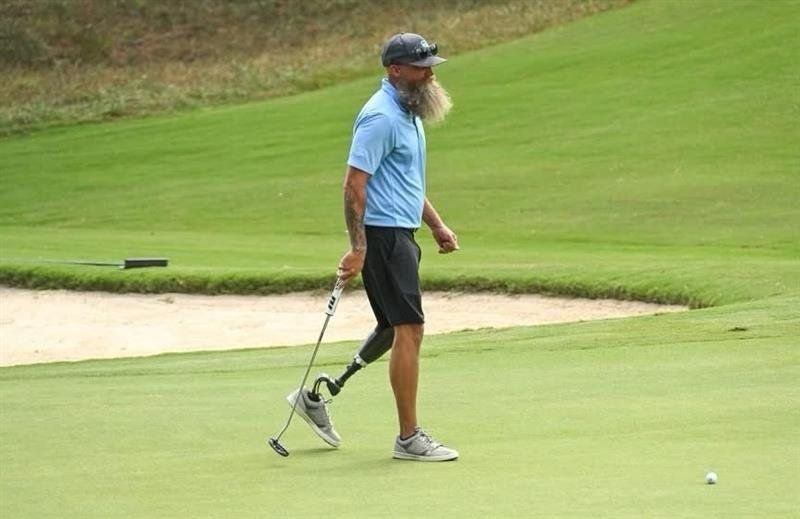
"Maybe every now and then I motivate someone else to push through and do what they want to do."
Ryan Roberts
A Lot of Cheerleaders
Ryan's corner is full: Jenny, his mom and dad, his mother-in-law, all four kids, and his Marine Corps buddies, including his Leathernecks brothers. When Ryan woke up from his first surgery after the crash, several of them were already in his recovery room, catching up so loudly that a nurse had to ask them to keep it down.
After Ryan came home, he still needed IV antibiotics every day. At first he went to an infusion center. Once COVID hit, the VA sent a nurse to teach Jenny to give them at home, and she learned to hook up and flush his line herself. And whatever Ryan dreams up next, she's in.
"Even if I have the most off the wall crazy idea, she's supportive."
The Marine Corps runs in the family. Ryan's son Jack, his golf partner, is in the Marine Corps delayed entry program and plans to ship out after he graduates.
Words for Someone Just Starting
Set goals, Ryan says, and then don't stop there. The more you do, the more normal life starts to feel.
He also says to find a prosthetist who will listen to what you need and what your goals are, then work with you to reach them.
And be a little stubborn. When Ryan needed answers from the VA, he called extension after extension and left voicemails for anyone he could, until someone picked up. Jason likes to say Ryan's spiritual gift is perseverance.
"You're going to have a lot of help and support, but no one's going to stop you from working as hard as you want to work," Ryan said.
"Keep pushing yourself, working towards your goals, accomplishing your goals and then set more goals."
For Veterans and Their Families
Ryan's injury didn't happen in the service, but his care runs through the VA, and he has two tips for other veterans and their families.
First, if you receive emergency care at a non-VA hospital, you generally must report it to the VA within 72 hours of when your emergency care starts, so the VA can coordinate your care and payment eligibility. Ryan didn't know this at first. His hospital bill topped $1 million, and at one point more than 30 denial letters arrived in a single day. It took months to sort out. Save the number in your phone and give it to your spouse.
Phone:
Call the 24/7 VA Emergency Care Reporting hotline at 844-724-7842.
Online:
Submit your treatment information through the VA Emergency Care Reporting Portal.
Second, VA Community Care can connect you with an approved provider close to home. Ryan's VA hospital is an hour away on a good day, so Community Care let him choose Alliance.
What's Next for Ryan
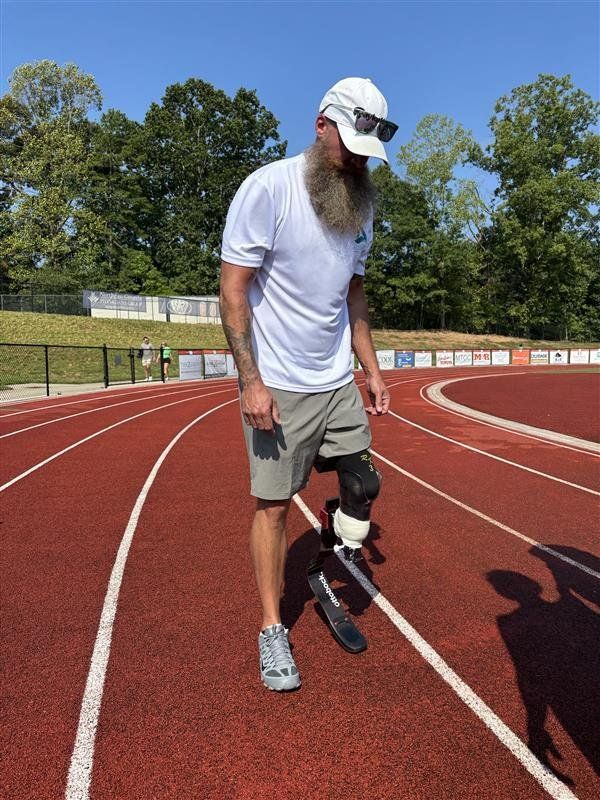
Ryan plans to play as many adaptive tournaments in Georgia as he can, maybe a couple out of state. And now he has a running prosthesis to master, in the yard, at the gym, maybe a mile on the treadmill.
How long it takes doesn't matter to him.
"It doesn't matter if it takes you like five years to accomplish a goal, or five weeks, or five days, but just stay after it."
Ryan Roberts
Ryan started with 15 surgeries and one goal: walk without help. Six years later he's riding a Road Glide, competing in adaptive golf, and learning to run again. We'll be cheering for him on every course and every lap.

